
Quick Summary
While quality residential automatic gate motors typically last between 10 and 15 years, real-world longevity depends heavily on motor architecture, cycle frequency, and mechanical resistance. Total Gate Repair Care emphasizes that structural soil shifting, misaligned tracks, and neglected hardware force operators to draw excessive current, causing premature wear that can cut equipment life in half. Readers will learn how to recognize early mechanical warning signs, determine when to repair versus replace an aging operator under current safety standards, and maintain their system to maximize operational life.
How Long Do Automatic Gate Motors Last – Maximize Lifespan
Most quality residential gate motors last about 10 to 15 years, but actual lifespan varies widely with usage, duty cycle, maintenance, and environment. Treating motor lifespan as a simple countdown of years overlooks how these machines actually wear out. In the field, gate openers rarely fail from internal electrical defects alone. Instead, structural soil movement, worn hinges, and mechanical drag force the motor to work harder than intended, which can significantly shorten operating life.[3]
Motor design and application also determine durability. Expected lifespan varies substantially between residential and commercial systems, as well as between brushed DC and brushless DC (BLDC) motors. Modern brushless DC motors can run past the 15-year mark with basic care, whereas cheaper brushed DC motors often require brush replacement or major service within 3 to 5 years. According to specialists at Total Gate Repair Care, for property owners dealing with heavy gates or shifting ground, understanding these mechanical factors helps prevent premature equipment failure.[1]
Gate Motor Longevity: Summary and Key Takeaways
While 10 to 15 years is the common benchmark for residential gate operators, real-world service life depends on motor design, operating cycles, and mechanical load. An electric gate motor’s lifespan can decrease significantly when the gate is heavy, out of level, or dragging along its track.
Quick Facts for Homeowners and Property Managers
Motor lifespan breaks down across a few key technical realities:
- Motor Type: Brushless DC (BLDC) motors often last 15+ years because they lack friction-prone carbon brushes. Low-end brushed DC motors usually require major service or replacement within 3 to 5 years.
- Cycle Count and Application: A residential motor running 4 to 6 cycles daily experiences far less cumulative wear than a high-traffic commercial gate cycling dozens or hundreds of times each day.
- Mechanical Drag: Gate motors are designed to push balanced gates, not lift or force sagging frames. A misaligned hinge can increase the electrical current drawn by the motor, contributing to premature wear on circuit boards and gearboxes.
How Many Years Does an Automatic Gate Motor Typically Last?
Need how long do automatic gate motors last?
We’re available now — call for a fast, free estimate.
How Many Years Does an Automatic Gate Motor Typically Last? in brief: Most quality residential gate motors last about 10 to 15 years. However, high-traffic commercial systems and heavy-use installations generally wear out sooner than low-traffic residential systems due to continuous thermal and mechanical stress, even when properly maintained.
When asking how long automatic gate motors last, the answer depends on whether the unit is installed in a residential or commercial setting, the motor architecture (brushed vs. brushless DC), duty cycle ratings, and drive hardware condition. Commercial installations subject operators to continuous start-stop cycles, generating heat that gradually degrades mechanical seals and internal components. Residential setups place far less thermal stress on internal windings, allowing high-grade operators from established manufacturers to operate reliably for a decade or more.
Residential vs. Commercial Operating Demands
Manufacturers rate operators by duty cycle (the percentage of time a motor can run safely without overheating). A typical residential driveway gate operates at a low duty cycle, opening only a few times a day. Commercial and multi-family gates require continuous-duty AC or commercial-grade brushless DC motors engineered to dissipate heat continuously under heavy traffic loads.
| Feature | Brushed DC Motors | Brushless DC (BLDC) Motors |
|---|---|---|
| Expected Lifespan | 3 to 5 years (before major service/replacement) | 15+ years (residential conditions) |
| Primary Wear Point | Carbon brush friction and commutator wear | Bearings and external drive gears only |
| Thermal Efficiency | Lower heat dissipation; prone to thermal throttling | High efficiency; runs cooler under sustained load |
| Maintenance Needs | Brush replacements, carbon dust cleaning | Virtually zero internal motor maintenance |
Motor Technology: Brushless DC vs. Brushed Systems
Motor architecture is one of the clearest indicators of long-term reliability. Brushed motors rely on physical carbon brushes to deliver electrical current to the spinning armature. Over time, friction grinds these brushes down into fine conductive dust, leading to power loss or internal short circuits. Brushless DC motors use electronic sensors to alternate current, removing physical contact points entirely. This allows BLDC gate openers to handle heavier loads with significantly less internal wear.
The lifespan of a quality gate motor depends on how intensively it is used, how demanding the environmental conditions are at the installation site, and how regularly it is maintained.
Why Mechanical Drag and Soil Movement Can Shorten Motor Lifespan
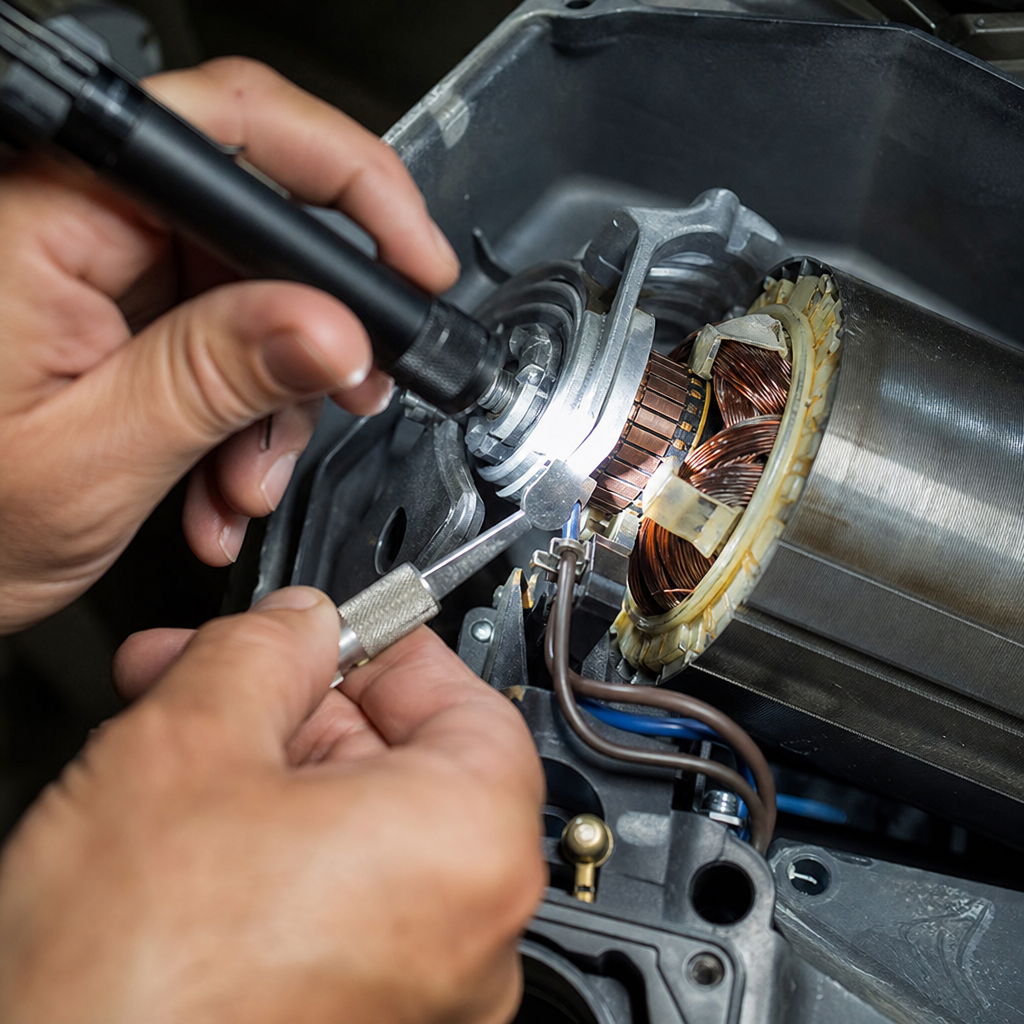
A primary cause of premature gate motor failure is physical resistance. Gate operators are designed to guide and propel a balanced gate, not fight against warped frames, misaligned rollers, or sinking support posts. When an operator meets unexpected drag, its electric motor pulls higher amperage to compensate. This extra current can overheat motor windings, strain control board components, and accelerate wear on internal drive gears.[2]
The Impact of Soil Shifting and Foundation Settling
Ground stability directly affects operator longevity. In areas prone to soil shifting, heavy rainfall, or seasonal moisture changes, concrete footings supporting gate posts can shift over time. Even a slight tilt throws off the swing geometry of an arm operator or forces a slide gate to bind inside its guide rollers.
- Swing Gates: Leaning posts cause the gate leaf to drop, creating increased torque resistance at the motor arm connection.
- Slide Gates: Ground settling can misalign the ground track, forcing the drive sprocket to work harder against the drive chain or track.
Weather and Environmental Factors
In hillside and valley environments, seasonal rainstorms can saturate expansive clay soils, accelerating post movement and footing instability. When the supporting structure shifts, the gate binds. Technicians at Total Gate Repair Care diagnosing failing operators frequently find that the motor itself was operational, but persistent physical drag from bound hinges or off-level tracks led to electrical overload and premature failure.
Common Warning Signs That a Gate Motor Is Failing
Need how long do automatic gate motors last?
We’re available now — call for a fast, free estimate.
Recognizing early mechanical and electrical distress helps prevent complete system failure.
Audible and Mechanical Symptoms
- Grinding or Screeching Sounds: Usually points to worn reduction gears inside the drive gearbox or dry, unlubricated output shaft bearings.
- Humming Without Movement: Often indicates a failing start capacitor (common on AC motors) or a seized drive assembly.
- Sluggish Travel Speed: If the gate moves noticeably slower than usual, the motor may be fighting physical resistance or experiencing low supply voltage.
- Physical Shaking or Stuttering: Points to worn internal drive belts, slipping clutches, or damaged internal limit cams.
Electrical and Limit Switch Issues
- Random Reversals: If the gate stops and reverses mid-cycle, the operator’s current-sensing safety system may be tripping due to excess resistance along the gate’s path.
- Inconsistent Stopping Points: Worn magnetic limit switches or slipping limit gears can cause the gate to overshoot stops or halt before fully closing.
- Delayed Remote Response: Corroded receiver terminals, moisture on the main control board, or failing logic boards cause intermittent operation.
Repair vs. Replace: Deciding the Fate of an Aging Motor
Deciding between fixing an existing gate motor or replacing it comes down to age, parts availability, and safety standards.
The 50% Rule and Safety Compliance
If a repair quote exceeds 50% of the cost of a new operator and the unit is over 8 to 10 years old, replacement is usually the more economical long-term choice. In addition, older operators installed prior to recent revisions of UL 325 safety standards lack modern monitored entrapment protection inputs. Upgrading to a modern unit ensures compliance with current safety codes, adding monitored photo eyes and reversing edges that protect vehicles and pedestrians.
Estimated Costs for Motor Repairs and Replacement
Repairing components like capacitors, limit switches, or control boards is relatively straightforward, while full operator replacement involves hardware, electrical connections, and proper gate alignment.
| Decision Factor | Repair Option | Replacement Option |
|---|---|---|
| Equipment Age | Under 7 to 8 years old | 10+ years old or obsolete model |
| Typical Cost Range | $150 to $600 | $1,200 to $3,500 (installed) |
| Safety Features | Retains existing safety configuration | Updates system to current UL 325 standards |
| Parts Availability | OEM replacement parts easily sourced | Original parts discontinued or obsolete |
Frequently Asked Questions About Automatic Gate Motors
How often should an electric driveway gate motor be serviced?
As recommended by Total Gate Repair Care, residential gate operators should receive a professional inspection at least once a year. High-traffic commercial gates typically need quarterly inspections. Routine servicing includes checking gearbox lubrication, inspecting hinges and rollers, testing auto-reverse safety sensors, and verifying that post footings remain stable.
Can I replace an automatic gate motor myself?
DIY replacement is generally not recommended. Automatic gate operators require high-voltage electrical connections, precise mechanical clutch adjustment, and compliance with UL 325 safety standards. Improper installation geometry can damage mounting hardware and cause premature motor failure.
How much does a replacement gate motor cost installed?
Complete replacement typically costs between $1,200 and $3,500. The price varies based on the gate’s weight and length, whether it is a swing or slide design, the operator’s horsepower rating, and the required safety sensors and access controls.
What is the best way to make a gate motor last longer?
Keep the gate balanced and mechanically sound. Regularly lubricate hinges and rollers, keep slide tracks clear of debris, seal entry points to prevent insects and moisture from damaging circuit boards, and address post movement or sagging promptly.
Need how long do automatic gate motors last?
We’re available now — call for a fast, free estimate.
Sources
- © October 2025 | IJIRT | Volume 12 Issue 5 | ISSN: 2349-6002 – ijirt.org (2025)
- Design of BLDC Motor for Automatic Gate – ijirt.org (2025)
- Analyzing the BLDC Motor for Automatic Gate – ijirt.org (2025)
Related reading: Chain Drive Vs Belt Drive Gate Openers | 10% Off & Free Estimate | Same-Day Service
Related reading: Solar Vs Electric Gate Openers Comparison | 10% Off & Free Estimate | Same-Day Service
Related reading: Liftmaster Gate Opener Installation Pricing – 10% Off & Free Estimate – Same-Day Service
Frequently Asked Questions
How can I tell if my gate motor is failing or if the gate is just binding from ground shifting?
Disengage the motor using the manual emergency release key and move the gate by hand. If the gate drags, resists, or catches along its travel path, shifting ground or misaligned hinges are causing mechanical drag rather than an internal motor fault. Total Gate Repair Care recommends having a specialist realign the physical track and posts before deciding to replace an overloaded motor.
Why is my automatic gate motor humming without moving the gate?
A humming motor typically points to a blown start capacitor on an AC unit, a seized drive gearbox, or physical resistance tripping the torque limiter. When a capacitor fails, the motor draws electrical power but cannot produce the initial torque needed to move the gate leaf. Technicians from Total Gate Repair Care can perform an electrical load test to see if a simple capacitor replacement will restore operation.
Can I retrofit modern safety sensors onto an older gate motor to meet UL 325 standards?
Older gate operators manufactured prior to modern UL 325 revisions generally lack the monitored circuit board inputs required to communicate with contemporary entrapment sensors. Adding external safety devices to obsolete control boards is often technically incompatible or cost-prohibitive. Total Gate Repair Care can evaluate your existing setup to determine if a full operator upgrade is necessary for code compliance.
About the author
 |
Marcus Vance Marcus Vance is a seasoned security systems specialist with over 12 years of experience in the access control industry. Holding a degree in Electrical Engineering from California State Polytechnic University, Pomona, he focuses on the practical application of gate motor diagnostics and commercial access solutions. His writing aims to provide actionable maintenance advice for property owners and facility managers. |