
Quick Summary
This comprehensive gate maintenance guide for longevity explains how to prevent severe mechanical strain, foundation sag, and premature system failures through proactive upkeep. Long-term reliability depends on keeping sliding tracks clean and dry, applying material-specific lubricants strictly to compatible pivot points, and separating basic DIY cleaning from professional mechanical adjustments. Readers will learn to spot early warning signs of operational failure and understand when to schedule a professional multi-point maintenance inspection with Total Gate Repair Care to keep their systems secure and functional.
Gate Maintenance Guide for Longevity: Avoid Costly Repairs
When a heavy driveway gate starts sticking, squealing, or dragging across the pavement, most property owners reach for a spray lubricant. Spraying lubricant on a binding hinge might quiet the noise temporarily, but it does nothing to fix underlying mechanical strain. Over time, unresolved drag can cause premature wear and damage to mechanical components.
Preventive care is about protecting the mechanical balance and structural alignment of the entire system. California workplace-safety materials report that failed or missing gate end-stops or positive-stops were involved in 13 of 16 reported cases from 2014 through 2024, or 81%. The brief does not establish that track issues caused those incidents. Routine upkeep keeps your property secure, prevents emergency lockouts, and saves thousands of dollars in premature replacement costs. This gate maintenance guide for longevity covers the practical inspection steps, correct lubrication methods, and structural checks recommended by Total Gate Repair Care to keep your system running reliably year after year.[1]
How Often Should an Automatic Driveway Gate Be Serviced?
Service intervals depend directly on daily cycle volume and local weather conditions. Have automatic gates professionally inspected at least annually, with more frequent service based on use, environmental exposure, manufacturer instructions, or observed problems.[2]
Residential vs. Commercial Service Intervals
Every time a gate cycles, mechanical stress travels through hinge pins, guide rollers, gear racks, and drive chains. Setting up structured preventative care for driveway gates prevents minor hardware loosening from turning into major mechanical problems.
| Application | Daily Cycle Volume | Recommended Owner Checks | Professional Service Schedule |
|---|---|---|---|
| Residential Driveway | 1 – 15 cycles | Monthly visual check, track sweep, sensor wipe down | At least annually, or more frequently based on use and conditions |
| Commercial / Multi-Family | 50+ cycles | Regular visual inspection and safety edge check | Have automatic gates professionally inspected at least annually, with more frequent service based on use, environmental exposure, manufacturer instructions, or observed problems. |
Cal/OSHA guidelines emphasize that property owners must keep gates well maintained and in good working order.[4]
The Impact of Environmental Stress on Maintenance Timing
Weather directly dictates how frequently your gate hardware needs attention. In regions with heavy seasonal rains or shifting soil, moisture softens the ground around post footings, while temperature swings cause metal frames to expand and contract. Near coastal or agricultural areas, airborne salt, fine dust, and moisture settle on metal surfaces, accelerating oxidation.
When airborne grit mixes with lubricant on an open sliding track, it creates an abrasive paste that accelerates wear on rollers. If your property faces heavy dust or prolonged wet seasons, increase your visual cleaning schedule to protect moving parts from premature wear.
Inspecting for Mechanical Strain: Foundation Shift and Particulate Wear
Need gate maintenance guide for longevity?
We’re available now – call for a fast, free estimate.
To prevent excessive wear on gate operators, regularly inspect for alignment, debris, corrosion, wear, and other conditions that can increase mechanical strain.
The Danger of Sub-Grade Post Settlement
Heavy swing gate leaves hang from hinge posts anchored into the ground. When soil shifts, post foundations can move out of plumb.
Even slight movement at the base of a hinge post can translate to noticeable sag at the latch end of the gate. When this happens, the gate leaf is no longer level. Instead of swinging freely through a balanced arc, the gate operator is forced to overcome off-axis resistance on open and close cycles. Applying surface lubricant onto hinges does not fix alignment issues.
Managing Friction and Debris on Moving Parts
Sliding driveway gates face friction problems when debris builds up on tracks and chains. Applying heavy lubricants to exposed ground tracks can attract dirt, sand, and plant matter.
Over time, exposed tracks can become clogged with abrasive grit. Every time the gate roller encounters this debris, the system experiences increased mechanical resistance. To protect the gate system, exposed ground tracks must remain clean and dry, while lubrication should be reserved for compatible pivot points and components designed for lubrication.
The Right Lubricants and Cleaners for Hinges, Rollers, and Tracks
As specialists at Total Gate Repair Care note, using improper lubricants can accelerate wear or attract debris. Always use a manufacturer-approved lubricant suited to the component.
Lubrication Guidelines for Gate Systems
Select lubricants carefully based on component materials and manufacturer recommendations.
| Component / Material | Lubrication Guidance |
|---|---|
| Bare-Metal Pivots, Hinges, and Rollers | Apply a compatible light lithium-based lubricant or manufacturer-approved product. |
| Components Near Rubber or Plastic | Use a light silicone lubricant suited to the material. |
| Sliding Gate Ground Tracks and Dry-Running Parts | Keep clean and dry. Avoid applying lubricant to components designed to run dry. |
| Electrical Parts and Sensors | Do not lubricate. Keep clean and dry. |
How to Protect Gate Electronics and Metal from Weather and Moisture
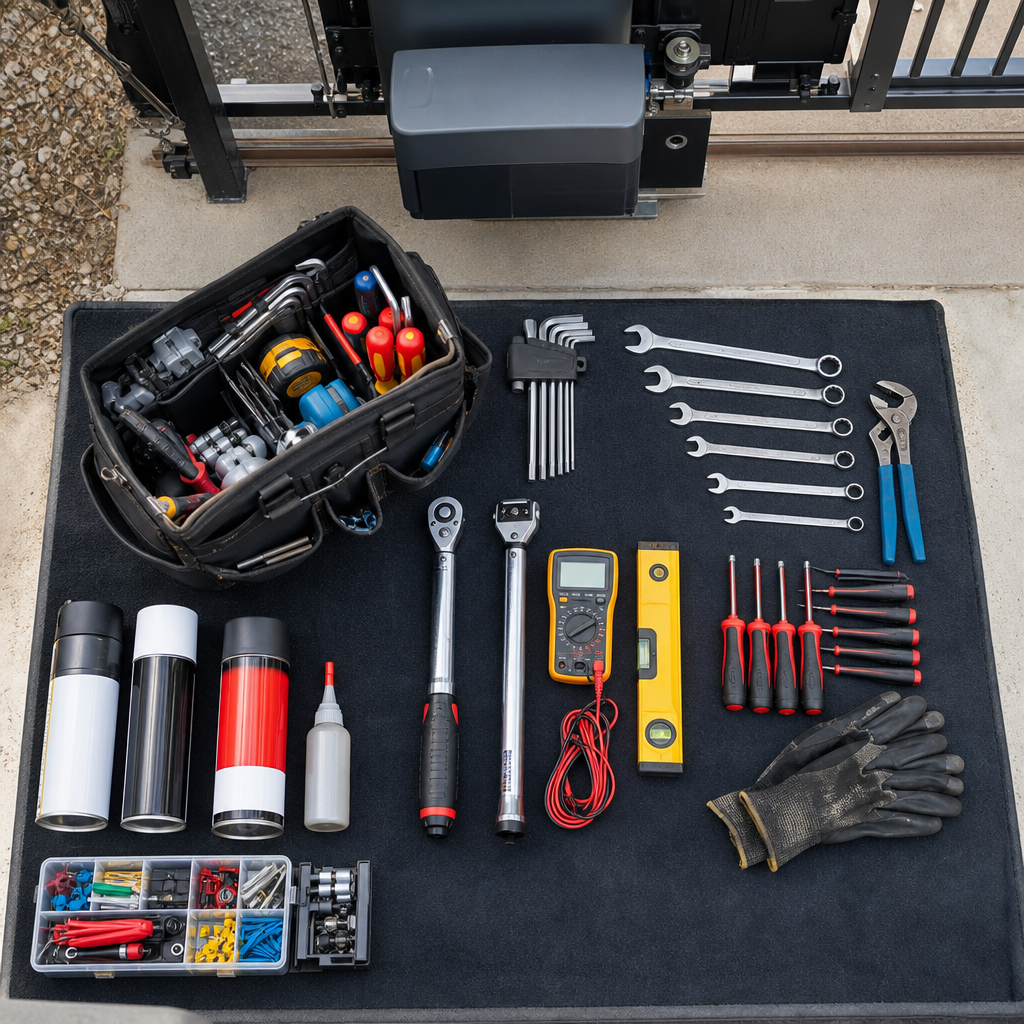
Outdoor gate automation systems rely on electrical components and sensors exposed to outdoor temperatures and weather year-round. Protecting these components requires proactive sealing and moisture control.[5]
Protecting Control Enclosures Against Moisture and Pests
Electrical control boxes can become shelters for pests, which may damage wiring or internal components.
- Check enclosure gaskets: Inspect the seal around the main control box door. If the gasket is damaged or brittle, replace it to prevent water intrusion.
- Inspect conduit entries: Ensure electrical conduit openings entering the enclosure are properly sealed to prevent moisture and pests from entering the housing.
- Prevent pest intrusion: Inspect the cabinet regularly and keep internal areas clear of nesting materials or debris.
Corrosion Prevention for Metal Gates
Corrosion weakens structural integrity over time. On iron and steel gates, pay close attention to bottom rails, hinge welds, and ground-level pickets.
- Keep metal surfaces clean and dry: Remove standing water and prevent repeated sprinkler exposure.
- Address surface rust promptly: Clean away any surface rust down to bare metal as soon as it appears.
- Apply protective coatings: Apply a compatible corrosion-resistant primer and protective topcoat suited for exterior metal surfaces.
Driveway Gate Maintenance Checklist: DIY Tasks vs. Professional Care
Need gate maintenance guide for longevity?
We’re available now – call for a fast, free estimate.
A dependable maintenance routine balances routine owner tasks with technical service that requires trained personnel.
Safe DIY Tasks for Homeowners and Facility Managers
- Track and path clearing: Clean tracks and remove debris and vegetation from the gate path.
- Sensor cleaning: Clean sensors and photo-eye lenses with a soft cloth to keep optical paths clear.
- Safety and manual checks: Test the manual release and safety reversal according to manufacturer instructions.
- Visual hardware check: Inspect for visible damage and tighten accessible hardware that has loosened.
| Maintenance Category | Safe Homeowner DIY Tasks | Requires a Qualified Gate Specialist |
|---|---|---|
| Mechanical Hardware | Cleaning tracks, removing debris and vegetation, tightening accessible hardware. | Force or limit adjustments, replacing worn internal gears, repairing hazardous moving components. |
| Structural Framework | Inspecting visible damage, spot-priming and painting surface rust. | Structural damage repair, post realignment, hinge welding, footing repair. |
| Electrical and Safety | Testing manual release and safety reversal per manufacturer instructions, cleaning sensors. | Electrical work, motor or control-board repairs, persistent malfunctions, loop detector troubleshooting. |
When to Call a Professional for Gate Opener Repair
If your gate requires significant physical force to move in manual mode, stop using the automatic opener until it is evaluated. Forcing an operator to move an unbalanced gate can damage mechanical parts and motor windings. Electrical work, motor or control-board repairs, structural damage, force or limit adjustments, persistent malfunctions, and hazardous moving components should always be handled by a qualified professional.
Early Warning Signs Your Gate Needs Immediate Mechanical Attention
Automatic gate systems often show signs of mechanical or electrical strain before complete failure occurs:
- Grinding or squeaking sounds: Unusual noises indicate dry pivots, bearing wear, or lack of proper lubrication on moving parts.
- Mid-travel hesitation or shuddering: Stuttering or hesitation during travel suggests track misalignment, chain tension issues, or mechanical binding.
- Physical ground scraping: If a gate drags on the driveway or catches on guide brackets, foundation settlement or hinge wear has compromised alignment.
- Sensors ignoring obstructions: If the gate does not stop or reverse when safety devices are triggered, stop operation and have the safety circuits serviced immediately.
- Spontaneous reversal: A gate reversing unexpectedly during travel indicates mechanical obstruction, excessive resistance, or misadjusted limit settings.
Frequently Asked Questions About Gate Longevity and Maintenance
How often should an automatic driveway gate be serviced?
Have automatic gates professionally inspected at least annually, with more frequent service based on use, environmental exposure, manufacturer instructions, or observed problems. Property owners can perform basic visual checks and track cleaning monthly.
What is the best lubricant to use for gate hinges and tracks?
Use a manufacturer-approved lubricant suited to the component. Apply compatible light lithium-based lubricant on bare-metal pivots, hinges, and rollers, and use light silicone lubricant near rubber or plastic. Avoid lubricating electrical parts, sensors, or components designed to run dry, such as open ground tracks.
How long should gate components last?
Service life depends on the specific component, cycle volume, environmental exposure, and maintenance history. Specific components under defined operating conditions carry individual service-life ratings from manufacturers, rather than an automatic universal lifespan for the entire opener assembly. According to Total Gate Repair Care, routine maintenance and prompt repairs help maximize the operational life of all hardware.[3]
How should I clean my automated gate?
Clean gate frames and tracks using mild cleaning methods, keeping moisture away from operator housings, control boards, keypads, and safety sensors to avoid damaging sensitive electronic components.
Need gate maintenance guide for longevity?
We’re available now – call for a fast, free estimate.
Sources
- [PDF] Petition File No. 605 Cal/OSHA Evaluation – dir.ca.gov (2024)
- [PDF] Chapter G-1 – Bureau of Reclamation – usbr.gov (2015)
- ORNL/TM-2021/2372 – info.ornl.gov (2021)
- DETAILED RADIAL GATE INSPECTION REPORTS – ferc.gov (2001)
- [PDF] Review of Corrosion Inhibiting Mechanisms in Coatings – usbr.gov
Related reading: Home Door Access Control Systems | Call Now-10% Off | Same-Day Service | Free Estimate
Related reading: Door Access Control System for Home – Call Now-10% Off – Same-Day Service – Free Estimate
Related reading: Residential Automatic Bollards | Call Now-10% Off | Same-Day Service | Free Estimate
Frequently Asked Questions
Can hinge adjustments fix a driveway gate that is sagging due to post settlement?
Hinge adjustments can provide minor, temporary realignment, but they cannot correct underlying foundation shift. If a hinge post has shifted out of plumb, Total Gate Repair Care recommends a structural evaluation to stabilize the footing before off-axis drag damages the operator motor.
How can you tell if an automatic gate opener is under excessive mechanical strain?
Common indicators include a humming motor that hesitates before moving, visible shuddering during travel, squealing hardware, and unprovoked reversals. You can disconnect the operator to test the gate in manual mode; if it requires heavy physical effort to push, the system is suffering from mechanical resistance.
What should you do if gate safety sensors repeatedly trigger false reversals?
Start by wiping the sensor lenses with a dry microfiber cloth and clearing away any nearby weeds, spiderwebs, or debris blocking the optical beam. If spontaneous reversals persist after cleaning, contact Total Gate Repair Care to test safety circuit wiring, optical alignment, and control-board sensitivity settings.
About the author
 |
Sarah Miller Sarah Miller is a security and access control specialist with over eight years of experience in the automated gate industry. Holding a degree in Mechanical Engineering Technology from California State Polytechnic University, Pomona, she combines technical knowledge with practical insights. Her writing focuses on residential and commercial gate systems, specializing in emergency repair protocols and preventive maintenance. |